One of our member groups has sent us an interesting photo taken this month along KooyongKoot which shows a juvenile male Gang-gang Cockatoo – presumably with his mother. The upper part of an adult male’s head is normally completely bright red – our subject is maturing – but he has a way to go. On the other hand, the red/yellow “barring” on his chest will turn shades of grey – the more colourful barring is a female characteristic in adults.
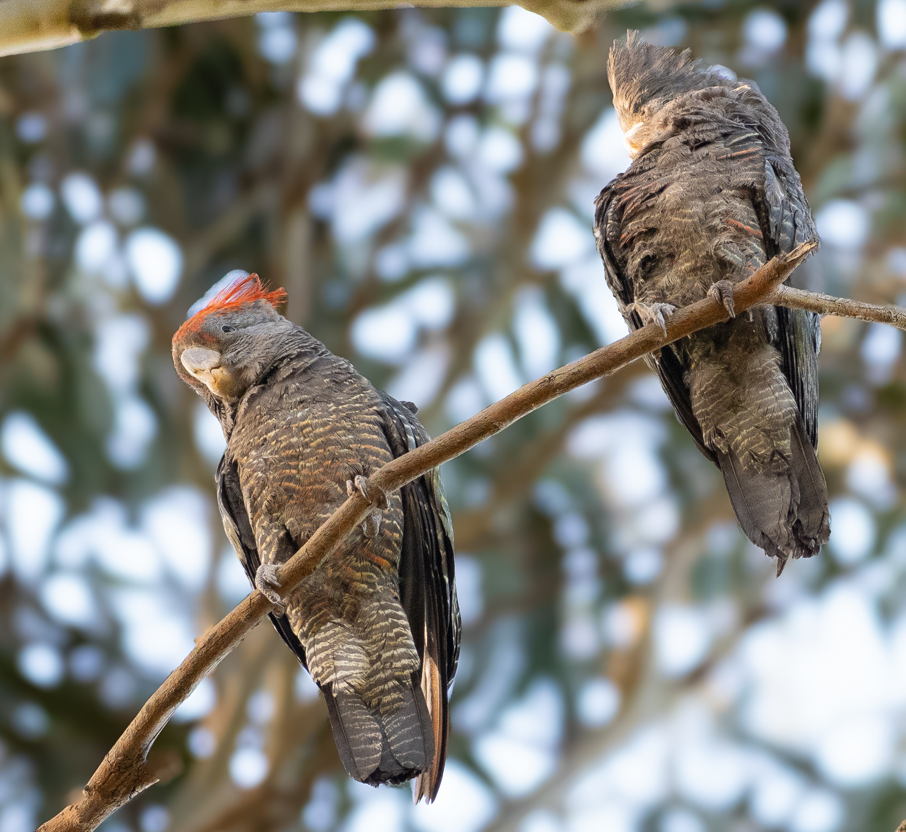
It gives us pause to think about the role of our urban environments in providing a reliable sanctuary for wildlife. Several endangered species, including the Gang-gang Cockatoo, live in and around our cities.
The Gang-gang species became endangered after bushfires (especially those in 2020) wiped out a significant amount of its “temperate forests” habitat in central/eastern Victoria, south-eastern NSW and the ACT. Described in one textbook as Autumn-Winter visitors to suburban parks in Canberra, Sydney and Melbourne, we are now seeing them in our catchment even in Summer – including small flocks/family groups. Furthermore, the presence of juveniles suggests that the species could well be breeding locally !
Clearly, the level of fire-protection is far better in cities than remote forests – and both food and water can be abundant in town. Change or die – the species must adapt to the changed environment while its traditional habitat (hopefully) recovers.
We are so fortunate to support habitat which helps keep the species ticking along.
Interestingly, Pied Currawongs and Crested Pigeons came to Melbourne during the Millenium Drought – and they’re still here!
Of course, there can be other threats in urban areas – one likely breeding area in central Blackburn was being considered for increased housing density under the “Activity Centres” program. This would have almost certainly led to negative impacts on habitat and biodiversity. Fortunately for the birds and for the environment (and us!), the Significant Landscape Overlay areas within Blackburn have been excluded from the Activity Centre zones at this point.