The following article reporting KKA’s Clean Waterways Sub-Committee plans to reduce litter pollution in Melbourne’s KooyongKoot catchment comes to us from Mark Landmann.
KooyongKoot catchment
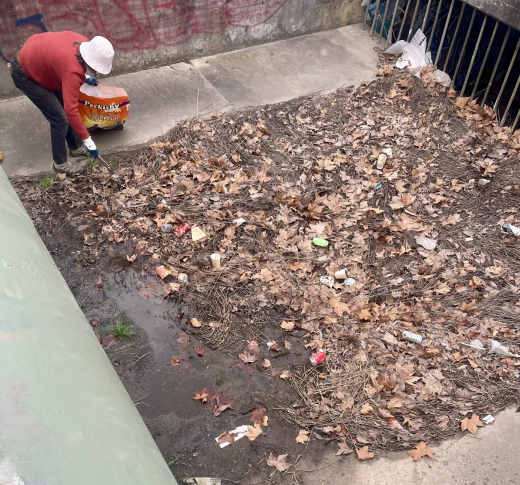
The KooyongKoot (Gardiners) Creek catchment covers 112 square kilometres across five municipalities in Melbourne’s east. The associated drainage system supports some 350,000 residents and numerous land zonings. Kooyongkoot’s litter and stormwater pollution significantly impact water quality and health in the Yarra River (Birrarung) and, in turn, Port Phillip Bay.
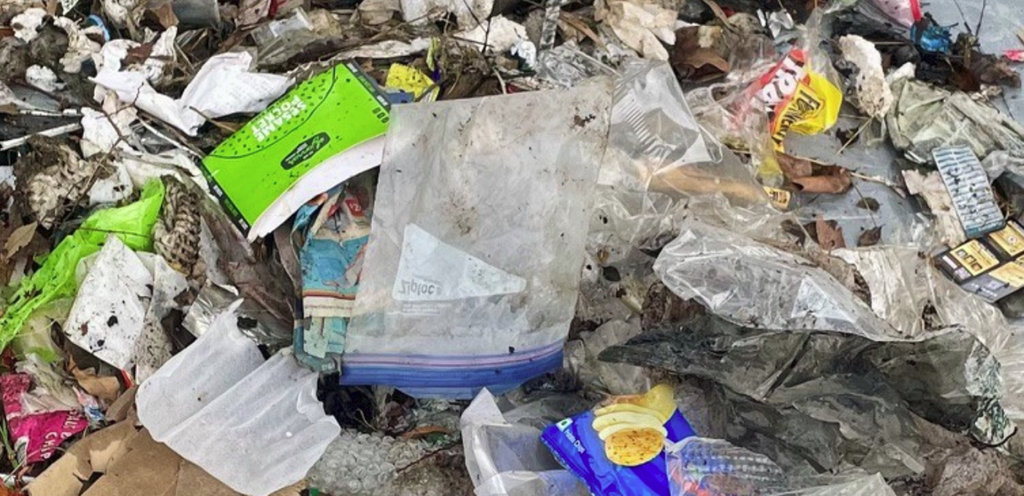
Mindful that most litter in urban waterways originates on streets before entering stormwater systems, KKA’s Clean Waterways Sub-Committee is developing strategies and processes to help reduce litter and stormwater pollution at the source.
Data Gathering and Developing Approaches
The Gardiners Creek Regional Collaboration (GCRC) is comprised of fourteen major stakeholders including the KKA, five municipal Councils and Melbourne Water – with oversight by Wurundjeri Traditional Owners. The GCRC has recently released a comprehensive strategic plan for holistic management of KooyongKoot. A key step has been the GCRC’s engagement of consultants to map the catchment’s main litter generation and accumulation hotspots, as well as various litter infrastructure and assets, in a cutting-edge Geographic Information System (GIS).
Based on this information and drawing on extensive local knowledge, the KKA’s Clean Waterways Sub-Committee is working in known litter generation and accumulation hotspots (such as shopping strips) – to implement litter management processes that can be replicated in other hotspots within the catchment.
This approach, underpinned by Council liaison, utilizes Beach Patrol’s Litter Stopper app to build data in either “township”, “neighbourhood” or “parkland” contexts. After establishing data trends via, for example, a trial, the KKA’s Clean Waterways Team aims to work with members of the GCRC, local communities, academic institutions and Clean Up Australia Day (CUAD), to plan and introduce interventions that hopefully see our collections data trend clearly downwards over time.
These interventions will include:
- correspondence with residents and/or businesses in the form of carefully prepared leafletting in multiple languages;
- correspondence and further engagement with residents and/or businesses via customized social media; and
- community and business education by way of signage, decals, letters, social media interaction and conversations within the township.
Trialling our approaches
An important part of our Clean Waterways work thus far has been our positive engagement with Whitehorse City Council Officers, which has led to our jointly identifying the Canterbury Road & Station Street shopping strip in Box Hill South as a useful “alpha test site” for establishing our process. Here, we’ve commenced collecting litter and logging the data in an “ongoing CUAD Event” at fortnightly intervals and have started positive informal conversations with curious locals.
Our thanks go to Whitehorse City Council’s Community Grants Team which has kindly awarded us an Innovation Grant to help us on our way. In particular, it will fund work by media experts on social media messaging to bring people together on this.
Apart from cleaner, healthier waterways, we hope our efforts will help the community in terms of improved local amenity and social cohesion; plus better resource efficiency by way of our directly complementing work currently undertaken by Council cleaners.
We use SnapSendSolve to report rubbish dumpings or very large litter items. Whitehorse City Council was recently voted number 1 in Victoria for community satisfaction on this excellent reporting app, further points to our complementarity with Council.
The Big Picture
We see the sustainability of this process as being based largely on its replicability – currently we are building a “template” to be applied in other suburbs and in other municipalities as we grow. In time, we will do the same in the finer-grained neighbourhood and open-space settings.
Crucially, this is much about people banding together to make a difference. We aspire to building a network of like-minded people using our template and gathering data as we go – to enable effective advocacy for the big actions authorities could make to significantly reduce litter and pollution in our catchment.
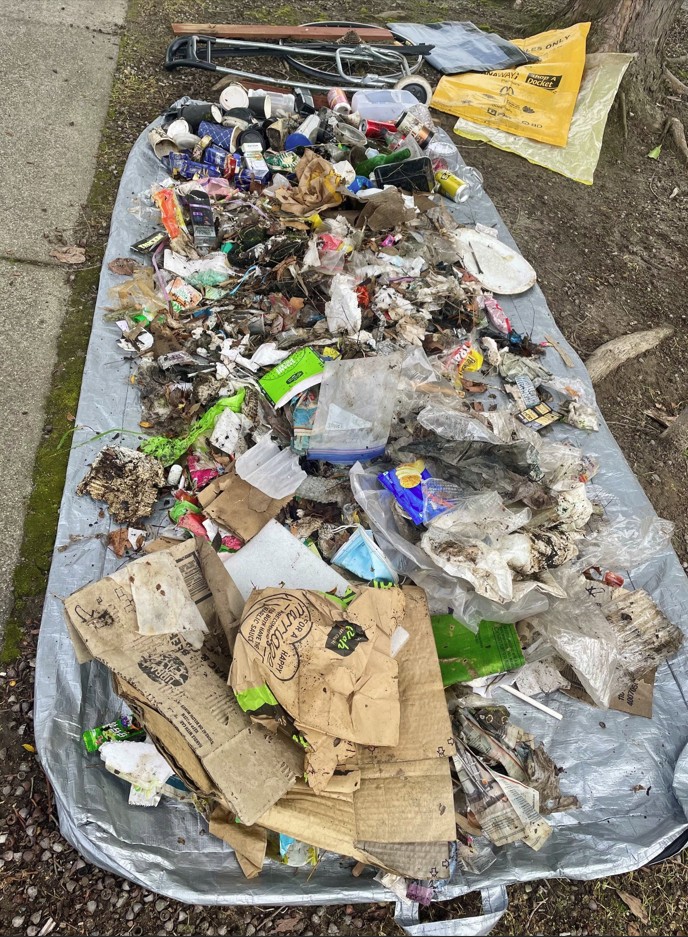
Our initial efforts have just scratched the surface: 23 kilograms of mainly soft plastic and small items and more than 1200 cigarette butts collected during our first four fortnightly cleans by a small band of volunteers in our “alpha-site” in Box Hill South.
23 kilos of rubbish and 1200 cigarette butts that will never see our waterways, with lots more to follow !
We are also thrilled by CUAD’s interest in our work as we look to the future.
Would you like to help ?
We really are at the point of needing to recruit a number of volunteers to help roll all this out.
If you would like to help, please contact us !!!!
Our thanks to Mark and his colleagues in the KKA Clean Waterways Sub-Committee for keeping us up-to-date. It’s great to hear they are making such good progress. Their strategy of making the approach replicable in a variety of contexts is sheer brilliance!